MiniMax H3: What Is This New AI Tool, and Why Is It Getting So Much Hype?
A few days ago I was just scrolling through AI news, and one name kept popping up again and again — MiniMax H3. At first I thought it was probably just another ChatGPT-style chatbot with a new name. But when I dug a little deeper, I realized this thing actually does something completely different, and that's probably why it's getting so much attention.
If you've also heard this name somewhere and are wondering what exactly it is, let me walk you through what I understood.
First things first — this is not a chatbot
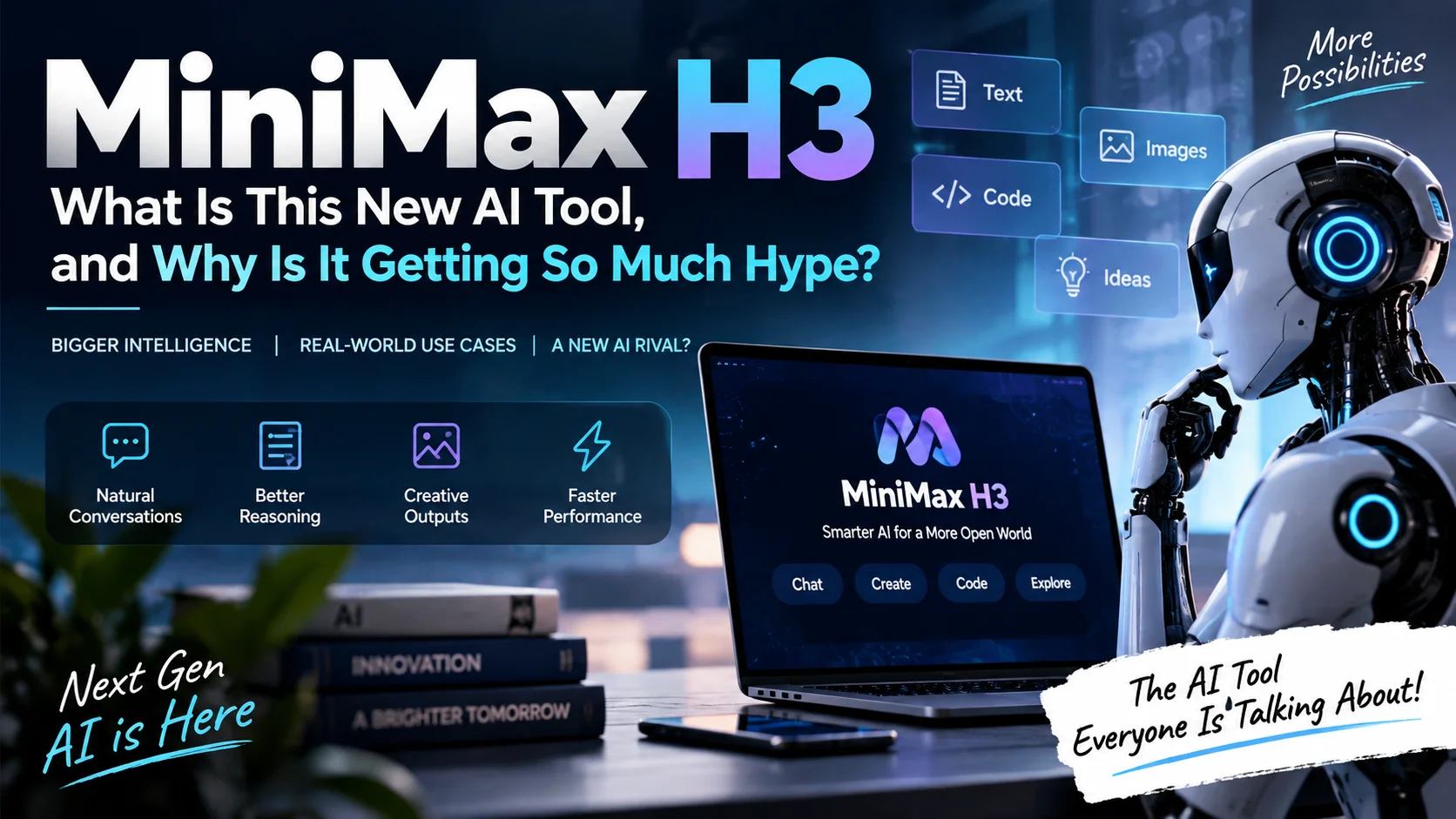
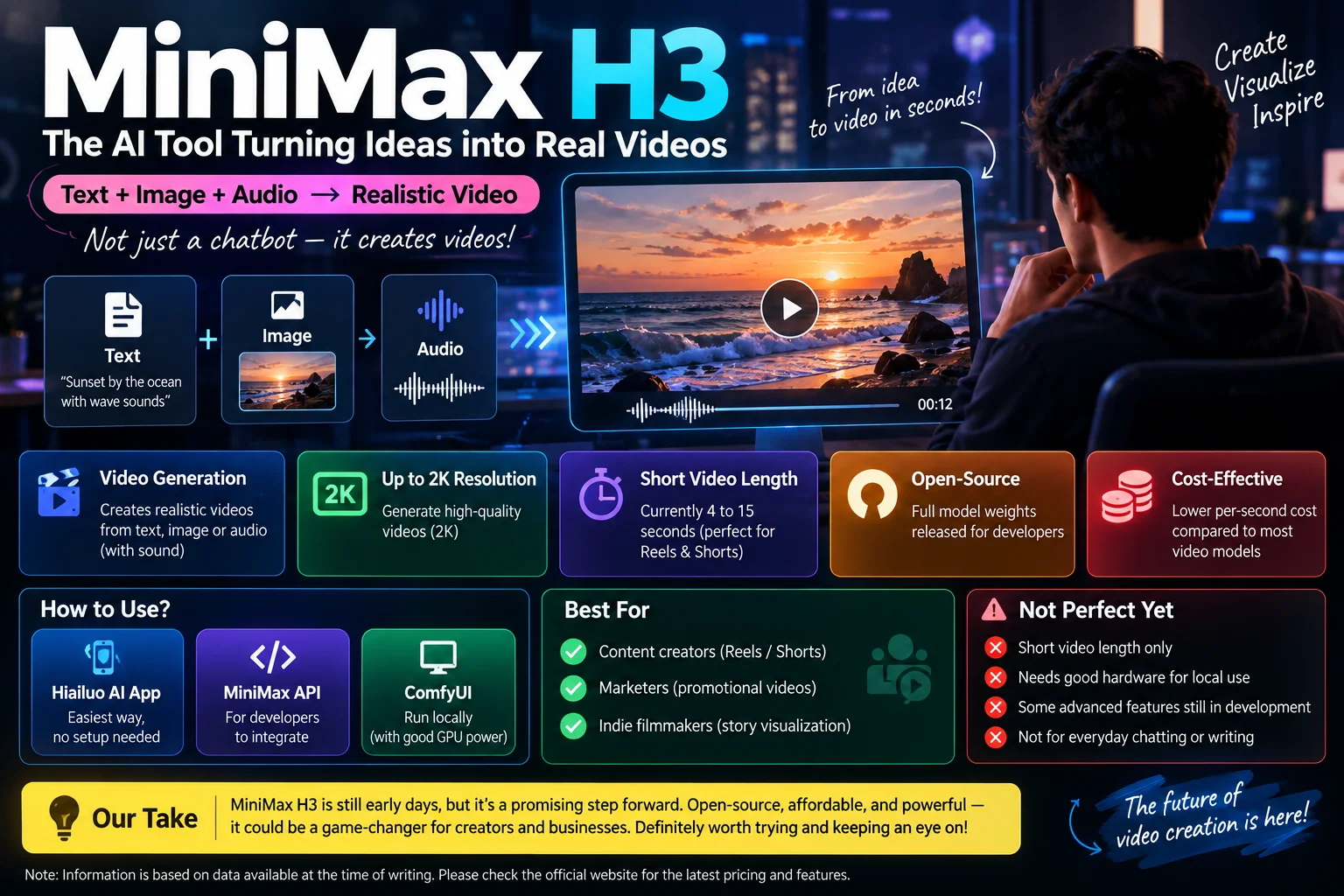
I think this is the biggest misunderstanding people have. With ChatGPT or Gemini, you talk to it, ask it questions, get it to write essays for you. MiniMax H3's job is completely different — it's an AI that takes text, an image, or audio and generates a video from it, complete with realistic-sounding audio.
So imagine this — you type "sunset by the ocean, with the sound of waves" — and it creates a short video clip of exactly that, with the wave sounds included too. Honestly, it sounded a bit strange to me the first time I heard it, but the more I read about it, the more interesting it got.
So what does it actually do, exactly?
MiniMax has been working on its Hailuo series for a while now — H3 is the third and newest version. Hailuo 01 and 02 came before this, but H3 has a few things different about it that make it more capable.
What impresses me the most is that it can understand several types of input at once — text, images, and audio, all combined. That means you're not just giving it a text prompt; you can also give it an image for the starting frame, and the model will start generating the video based on that.
As for output, it can generate video up to 2K resolution, though the length right now is limited to just 4 to 15 seconds. That might sound a bit short, but for short-form content (Reels, Shorts), it's actually plenty.
What I found most interesting
There are really two things that made this model stand out to me compared to others:
First — it's open-source. MiniMax has publicly released the full model weights. That means if a developer has decent GPU power, they can run it locally on their own servers and customize it however they want. This isn't common with big video-generation models — most of them stay closed-source.
Second — the price. The company claims that even for 2K output, its per-second cost is quite a bit lower than most mainstream video models. If it's really as affordable as being claimed, this could be a game-changer for small creators and businesses — because right now, using a good AI video tool tends to get expensive fast.
How do you actually use it?
If you want to try it yourself, there are three routes I came across.
The easiest way is the Hailuo AI app — no technical setup needed, you just type in a prompt and the video gets generated. If you're a developer and want to integrate it into your own product, there's also MiniMax's API available. And if you're a bit more technical and want local control, the community has already built a ComfyUI integration — but I should be upfront, you'll need fairly solid GPU power for that.
Who is this actually useful for?
Honestly, it's not for everyone. If you're looking for an AI for everyday chatting or writing, this isn't the tool for you. But if you're —
a content creator who needs quick visuals for Reels or Shorts, or a marketer who needs to put together promotional clips on a tight budget, or an indie filmmaker who wants to quickly visualize a story concept — then this is probably worth checking out.
But it's not perfect either
One thing I want to be clear about — this isn't some magic wand. Right now the video length is pretty short, you need decent hardware to run it locally, and the company itself has admitted that some advanced features (like sparse-attention support for faster processing) aren't fully ready yet and will come in future updates. So if you're expecting it to churn out a full movie starting tomorrow, don't set your expectations that high just yet.
My take, at the end of it all
I think MiniMax H3 is still early days, but the direction feels right. A tool that's both open-source and affordable — that combination doesn't come around often in the AI video space. If you're into creating video content, it's probably worth trying out yourself at least once. Beyond that, technology is moving so fast that what's cutting-edge today might feel outdated next month — so it's worth keeping an eye on this.
Note: The information above is based on data available at the time this article was written. Before using any tool, make sure to check its official website for the latest pricing and features.
What Happened at AI Infra Summit 2026? Complete Recap (Santa Clara, Sept 15–17)
What Can GPT-6 Astra Actually Do? A Complete Breakdown of Its Tools and Capabilities
Top AI Video Generation Tools 2026: What's Free, What's Worth Paying For